
Connectivity
Open Space
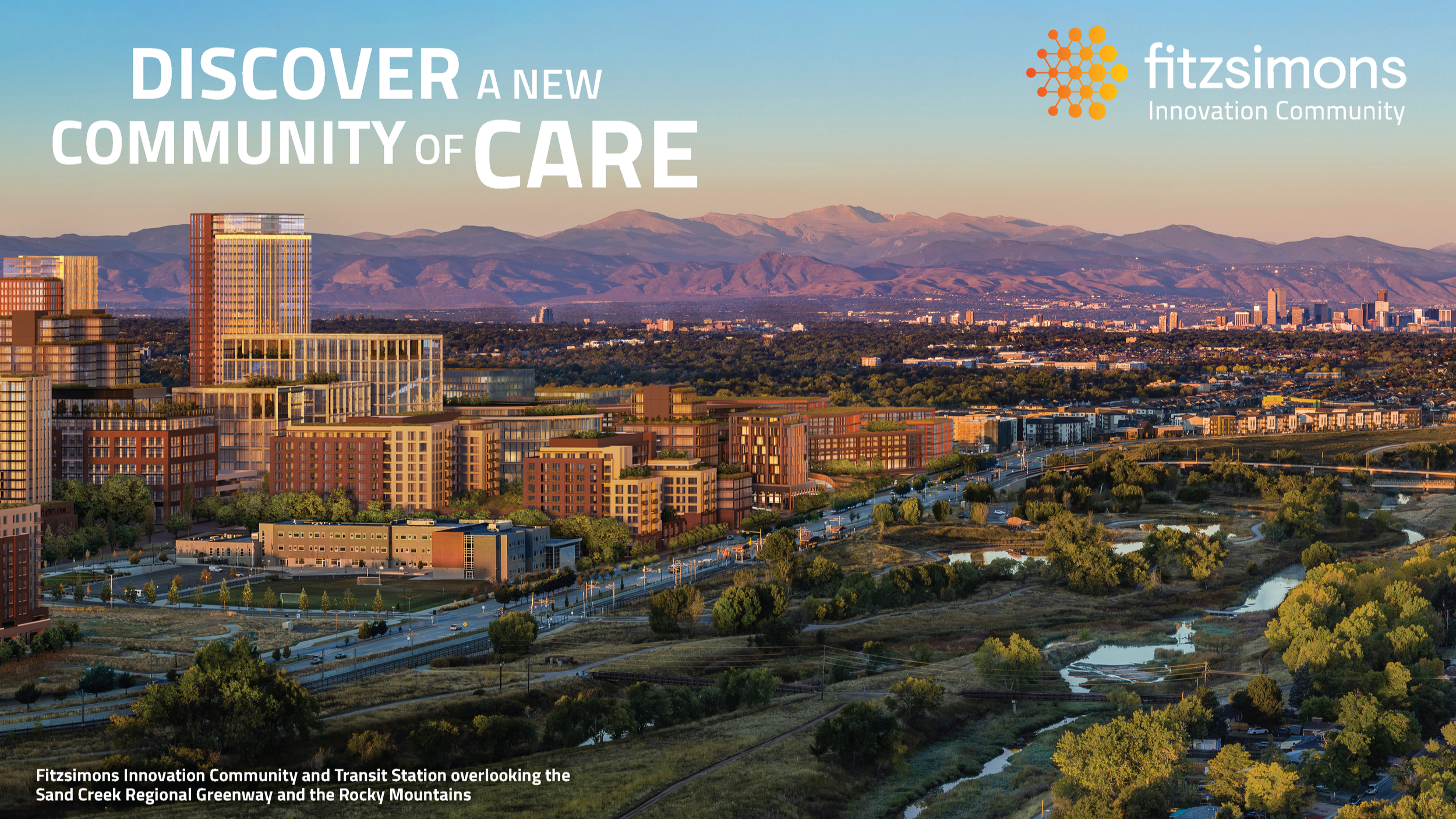
Fitzsimmons Innovation Community
Structuring the Transition from Suburban Campus to Urban District
01 Observations & Analysis
The campus contained significant institutional strength but lacked a coherent urban framework capable of organizing growth.
Systems
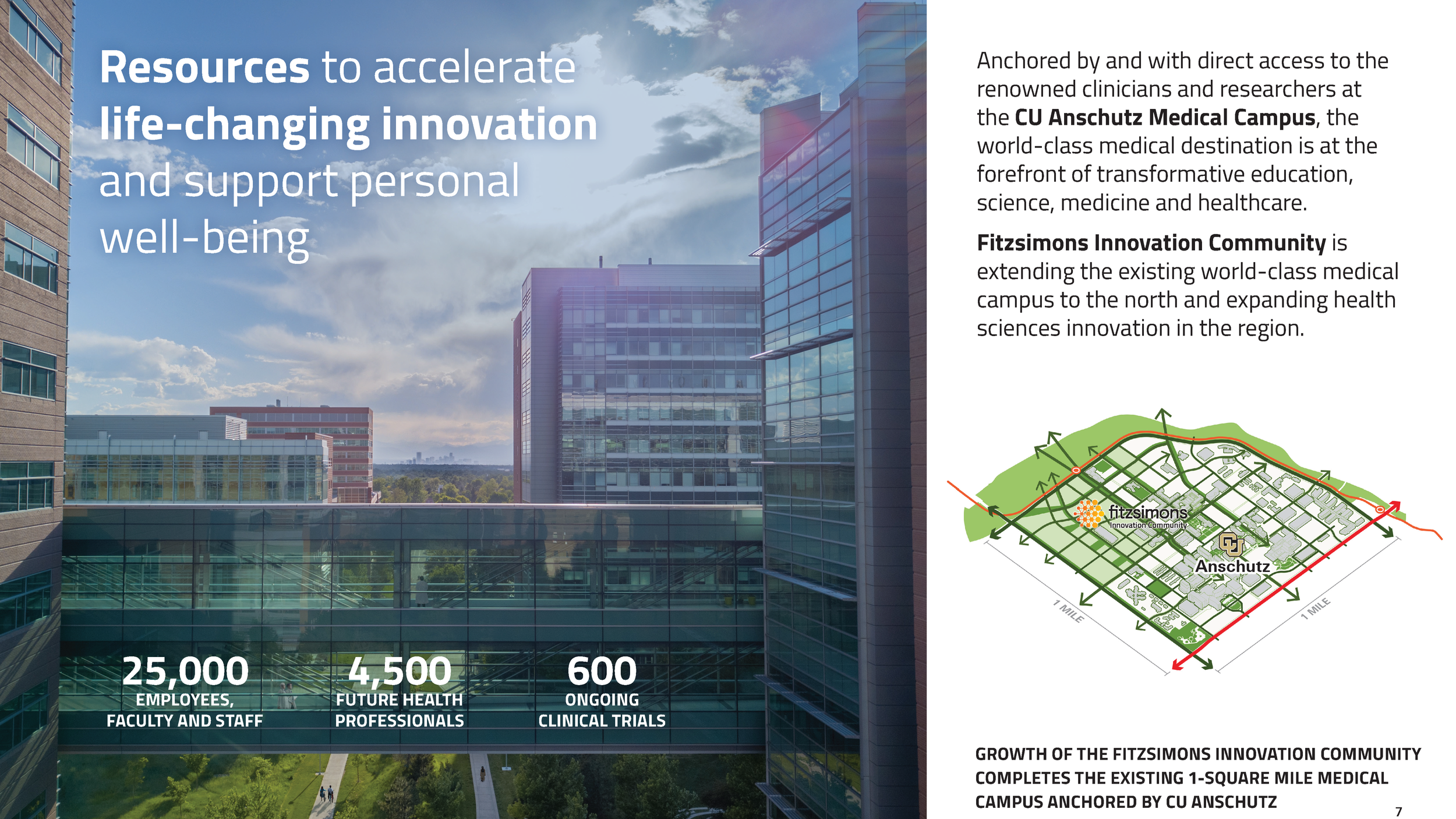
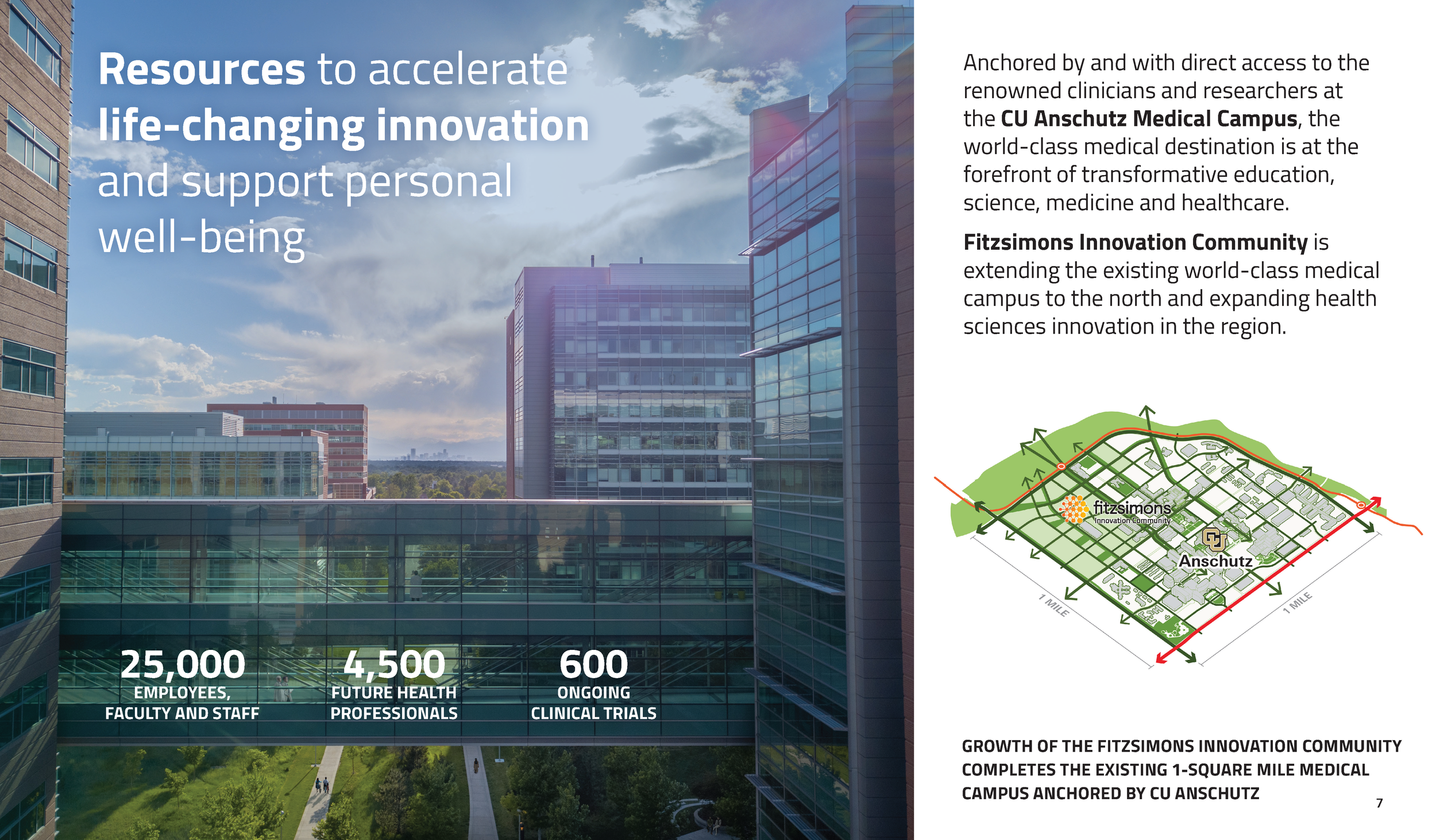
CU Anschutz Medical Campus as regional research anchor
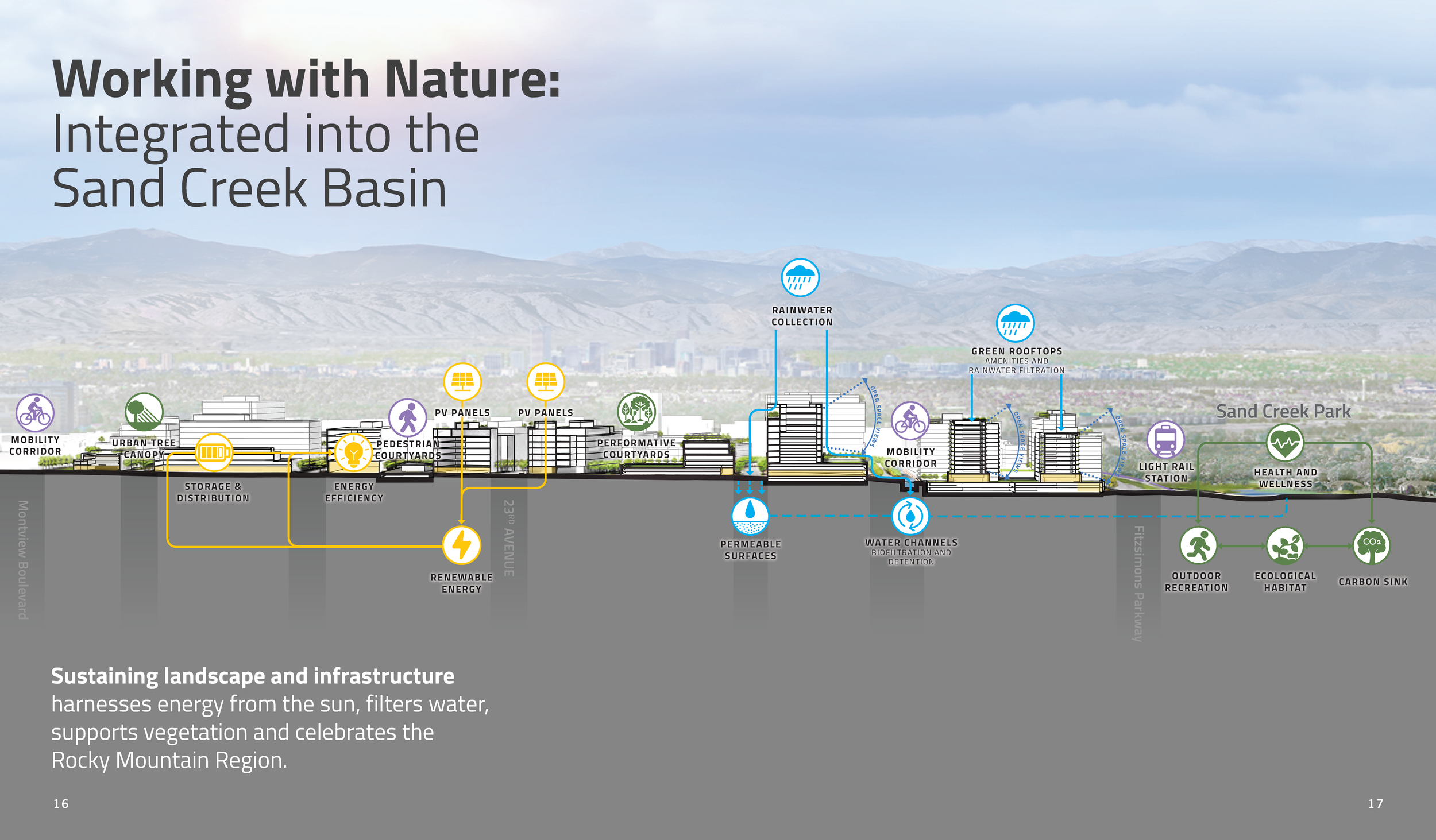
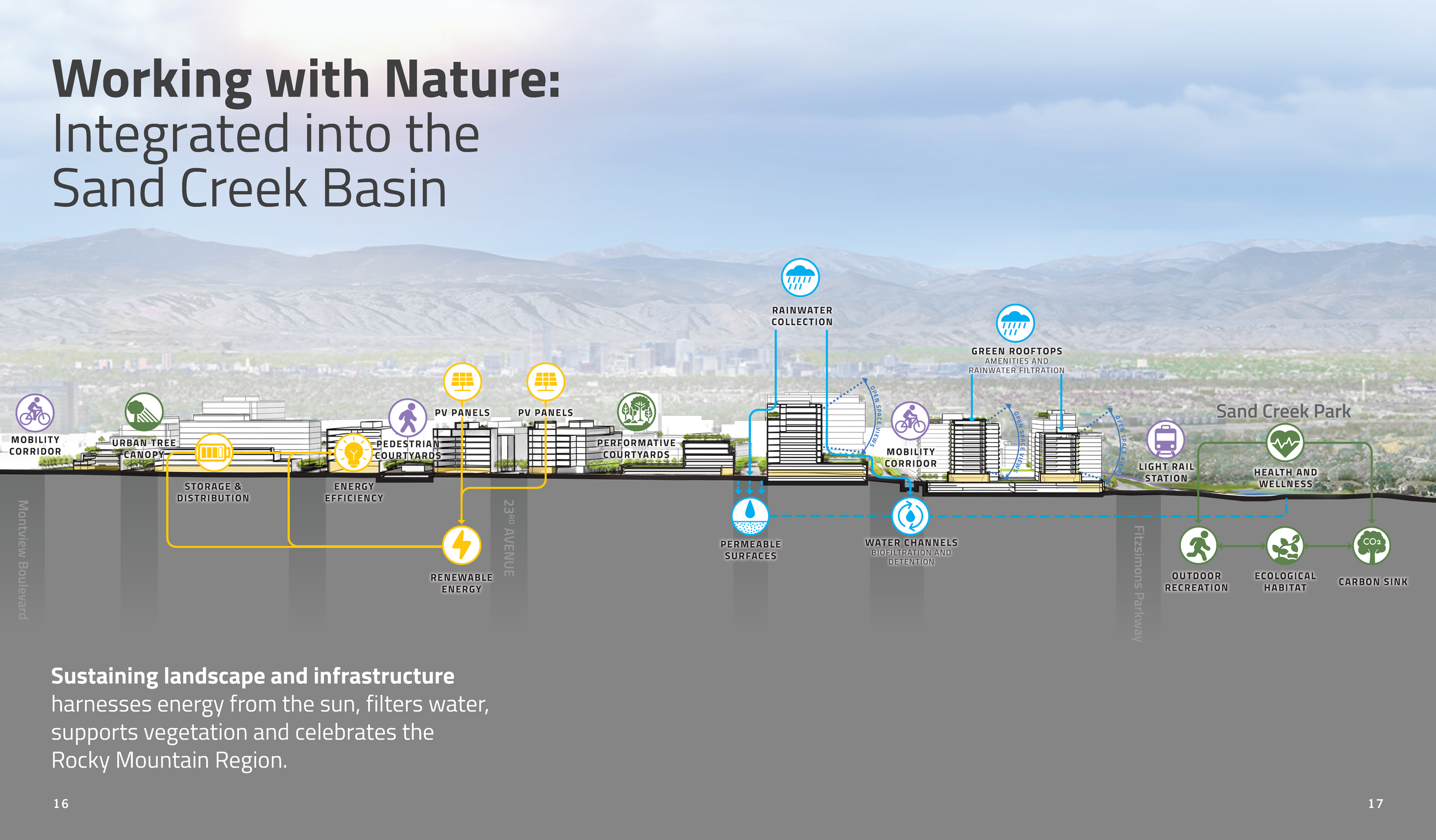
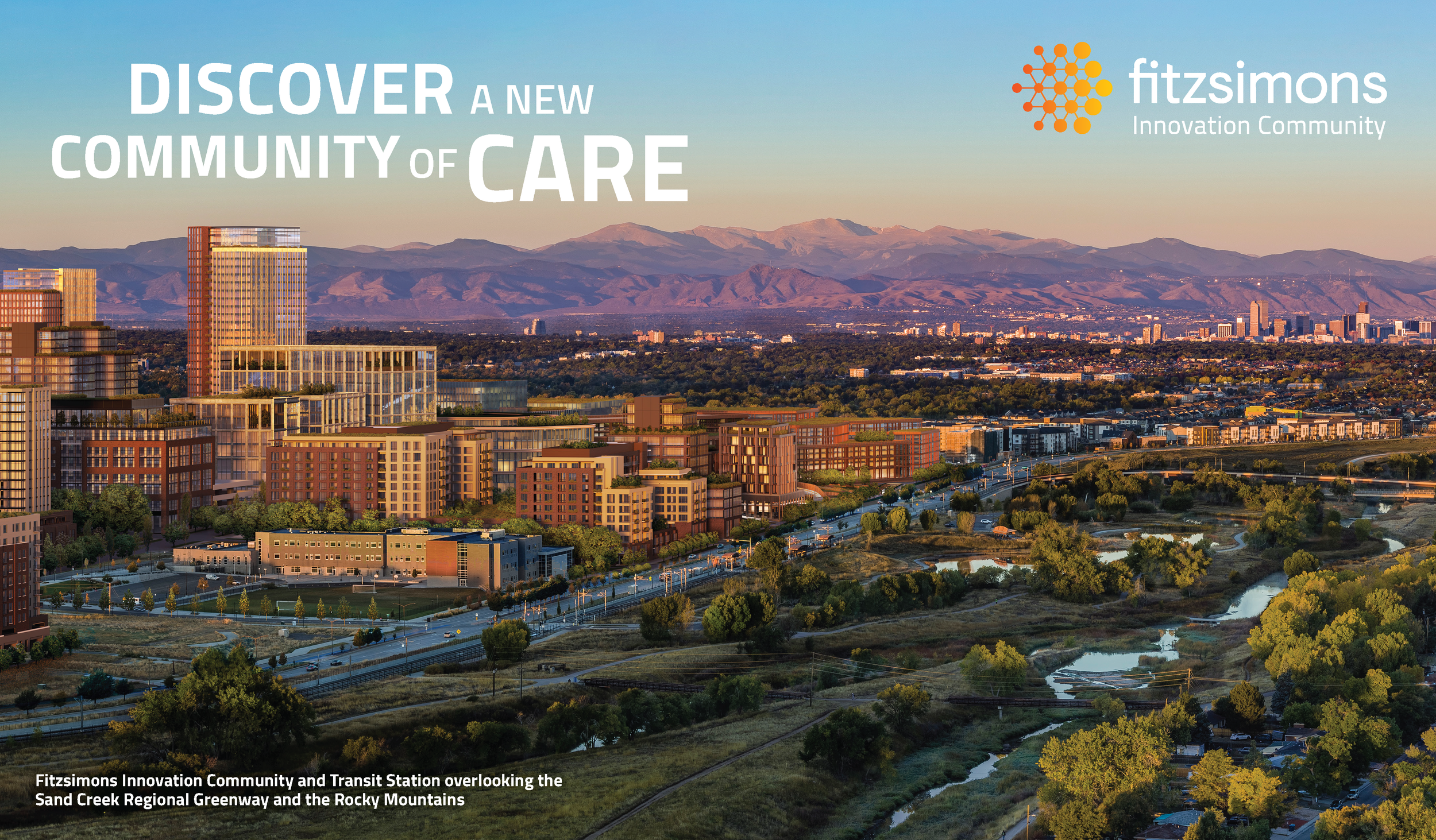
Sand Creek ecological corridor and regional trail network
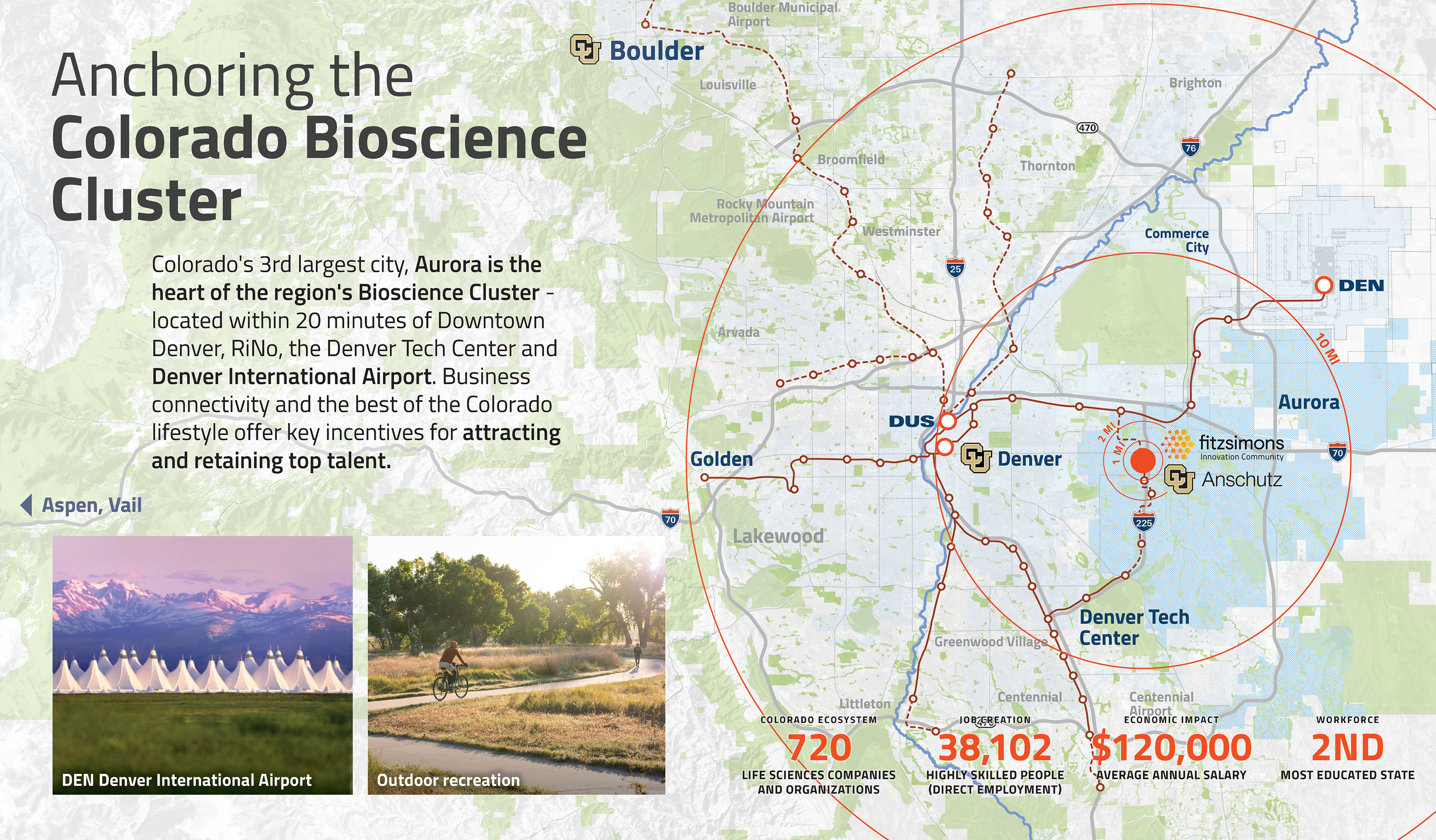
RTD rail station connecting the district to Denver
Overscaled arterial roadways and legacy military grid
Fragmented open space and campus circulation patterns
Fitzsimmons Innovation Community
Structuring the Transition from Suburban Campus to Urban District
01 Observations & Analysis
The campus contained significant institutional strength but lacked a coherent urban framework capable of organizing growth.
Systems
CU Anschutz Medical Campus as regional research anchor
Sand Creek ecological corridor and regional trail network
RTD rail station connecting the district to Denver
Overscaled arterial roadways and legacy military grid
Fragmented open space and campus circulation patterns
02 Patterns & Opportunities
To attract world-class talent, research institutions, and startups, the district required more than laboratory space. It needed civic infrastructure and a recognizable center.
Opportunities
Establish a civic core for students, researchers, and the Aurora community
Transform streets from auto corridors into walkable connections
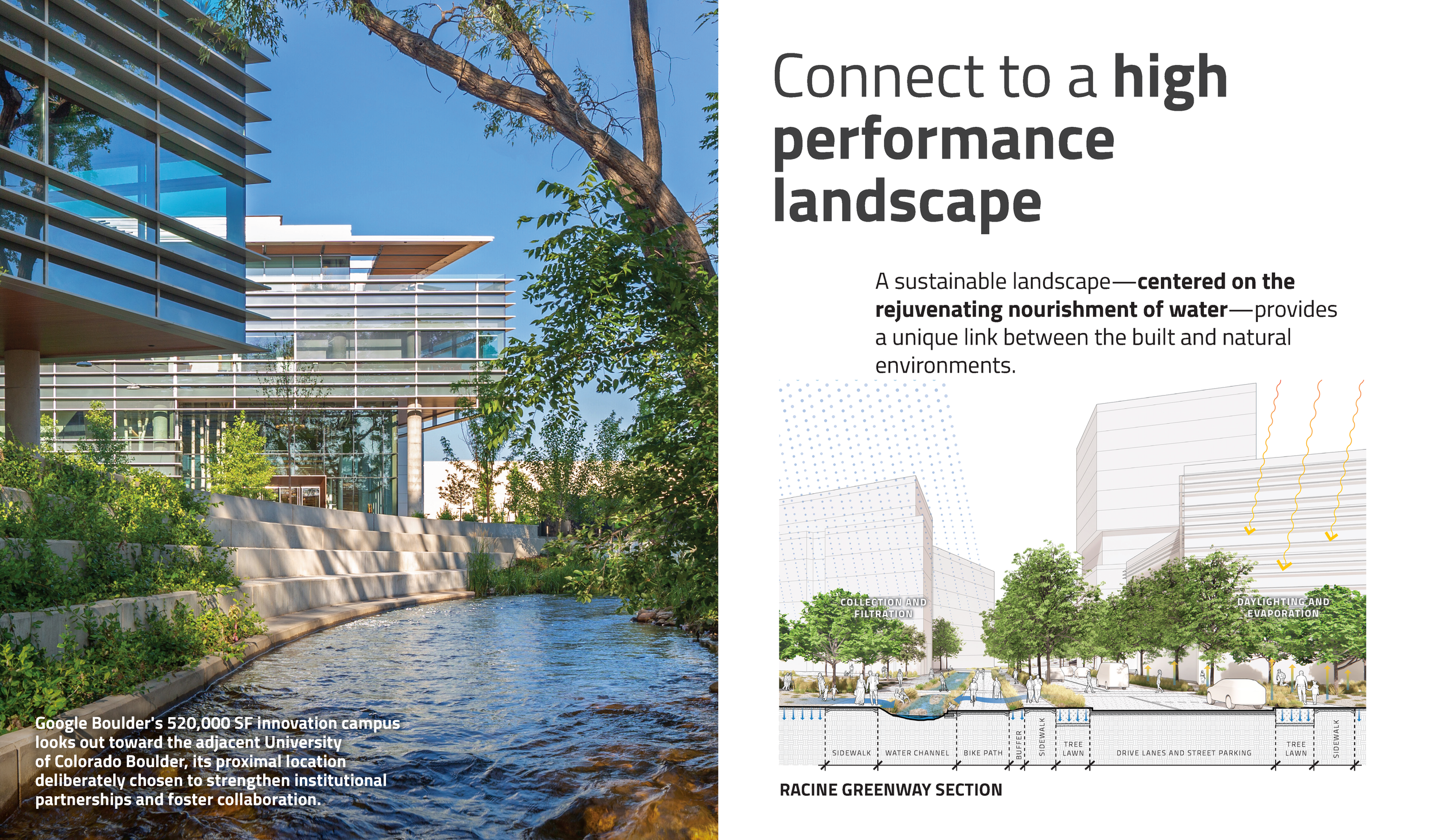
Organize open space into a connected civic landscape
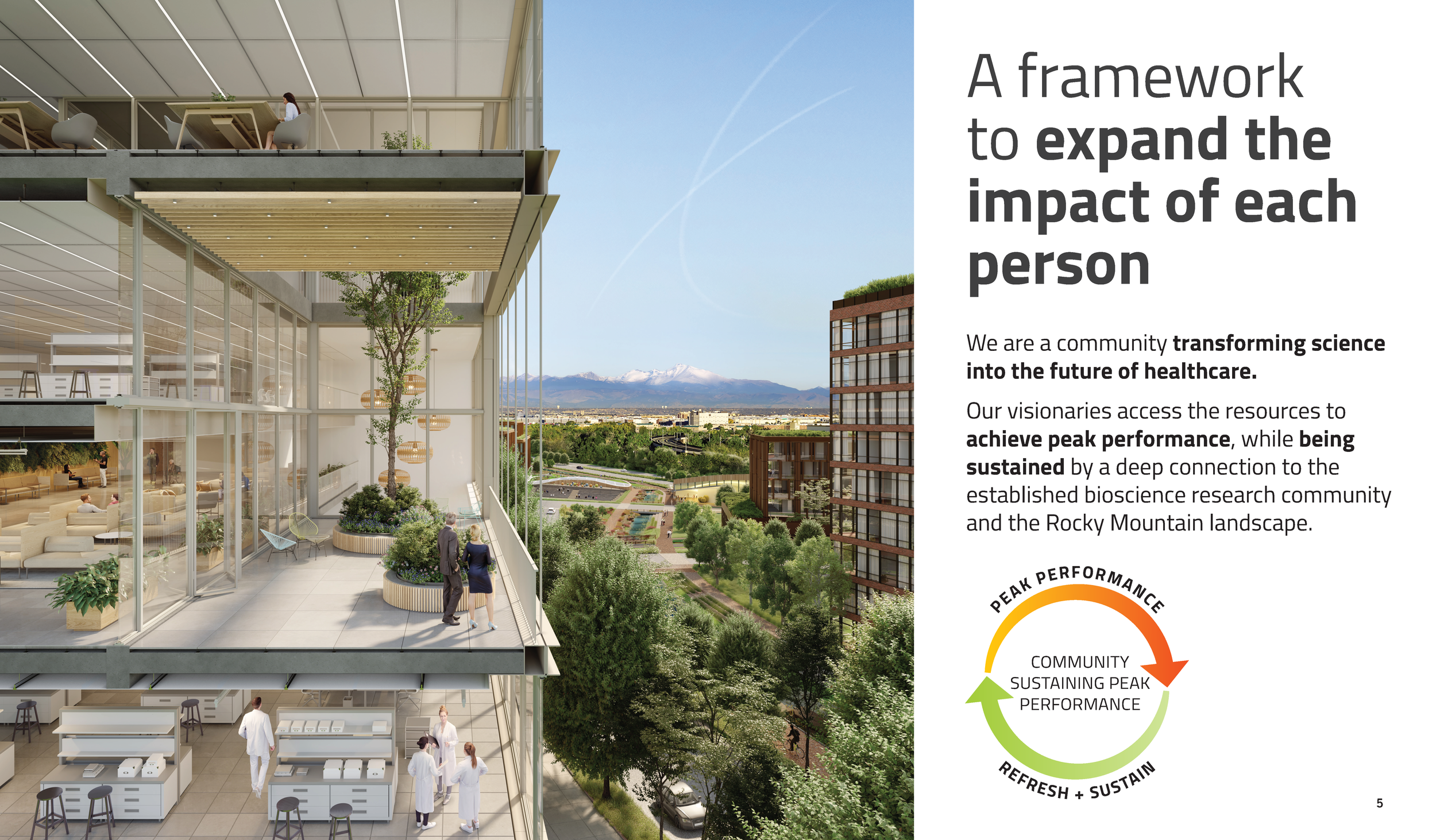
Create identity and gathering spaces for the innovation district
Align growth with regional transit access
03 — Structuring the Future
The General Development Plan established the spatial and infrastructure framework necessary for the district’s next phase of growth.
Framework
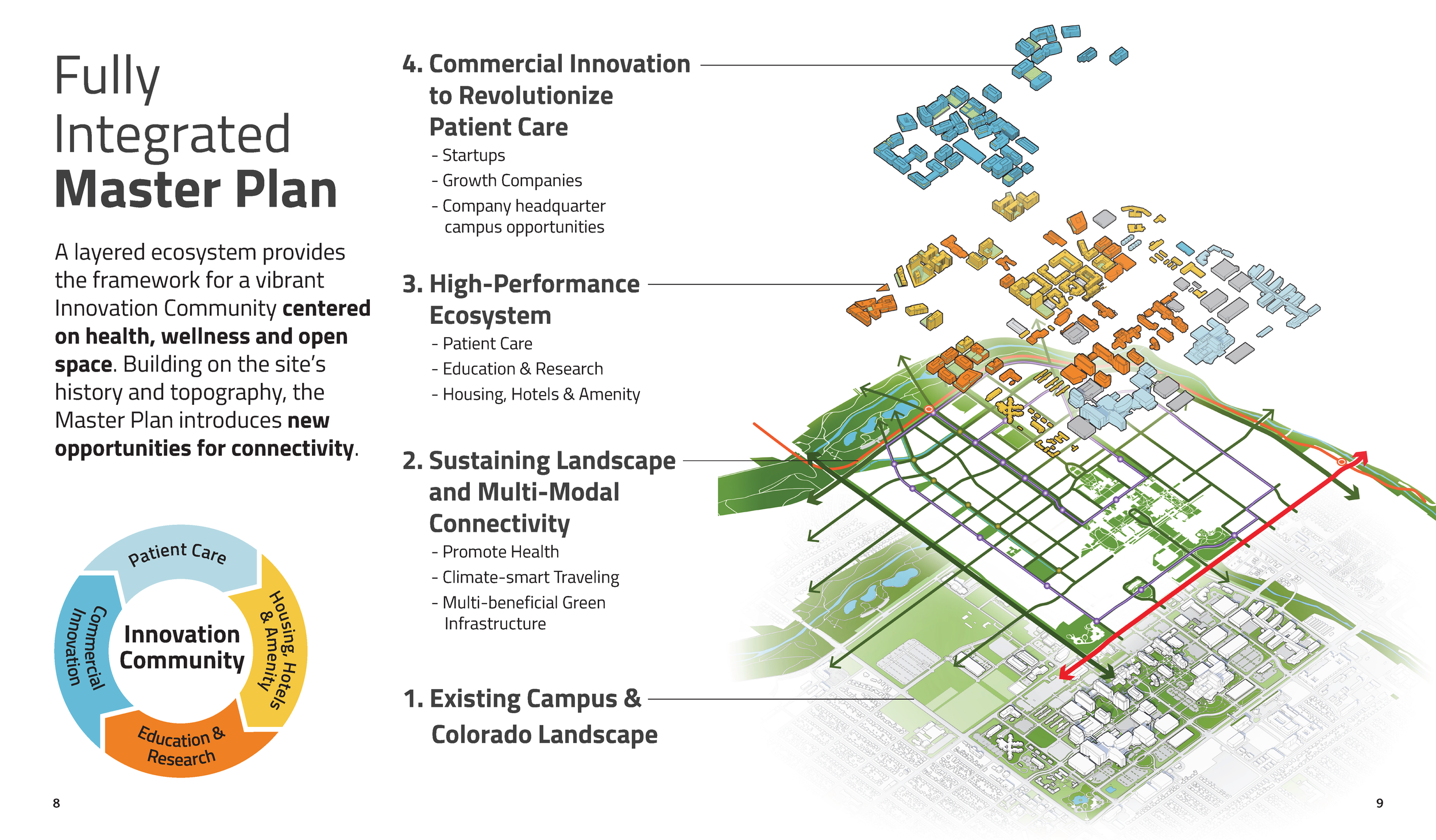
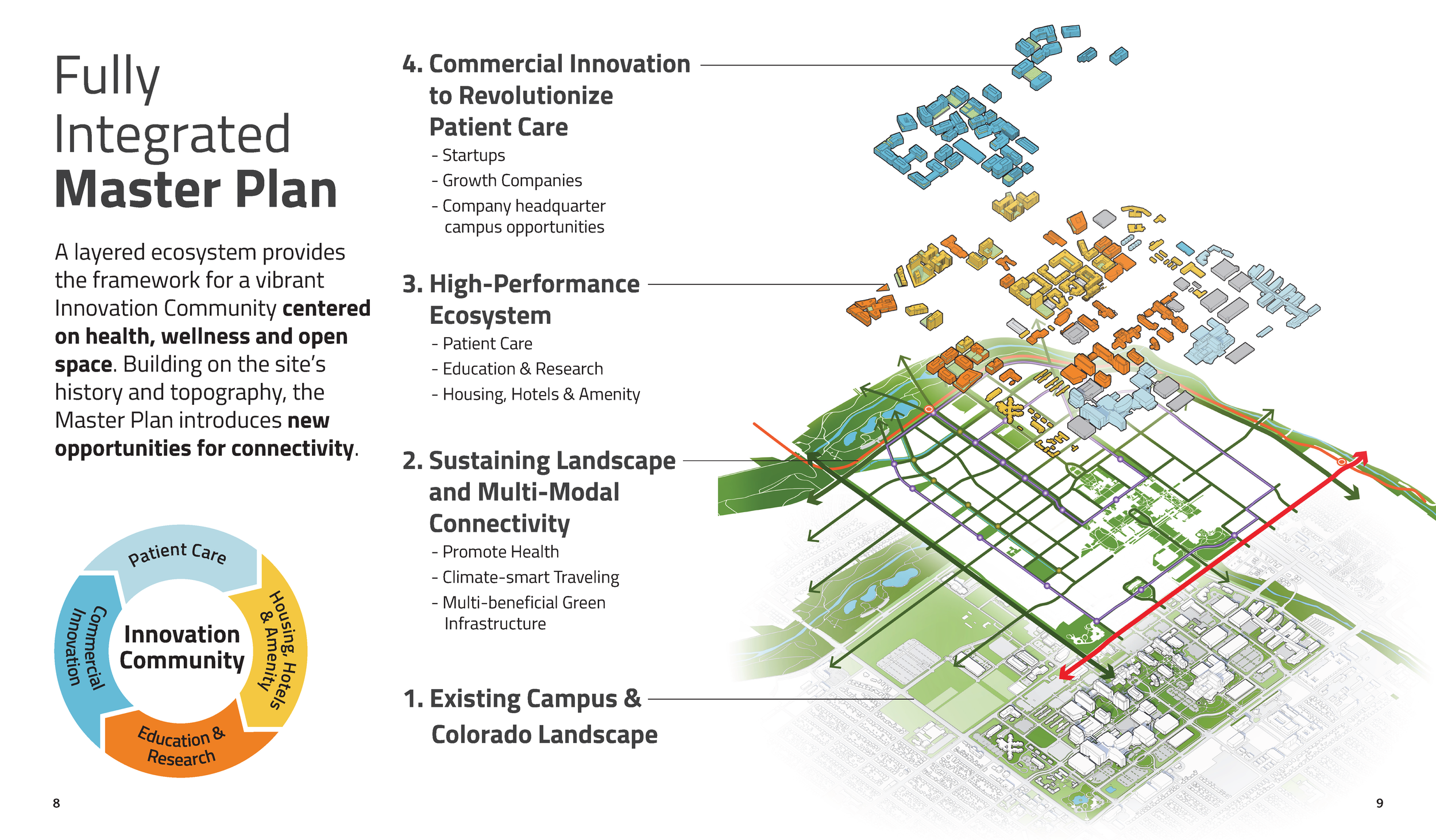
Urban street and block structure to support density
Integrated civic open space network
Multimodal mobility system linking campus and transit
Development capacity expanded from 6M to 18M square feet
Entitlement strategy supporting phased district growth
Client
Fitzsimons Redevelopment Authority
Role
Urban Design, Master Planning and Entitlement Lead*
Team
Mobility
Fehr & Peers
Civil Engineering
Matrix
Public Finance Strae
Client
Fitzsimons Redevelopment Authority
Role
Urban Design, Master Planning and Entitlement Lead*
Team
Mobility
Fehr & Peers
Civil Engineering
Matrix
Public Finance Strae
Fitzsimmons Innovation Community
Structuring the Transition from Suburban Campus to Urban District
01 Observations & Analysis
The campus contained significant institutional strength but lacked a coherent urban framework capable of organizing growth.
Systems
CU Anschutz Medical Campus as regional research anchor
Sand Creek ecological corridor and regional trail network
RTD rail station connecting the district to Denver
Overscaled arterial roadways and legacy military grid
Fragmented open space and campus circulation patterns
02 Patterns & Opportunities
To attract world-class talent, research institutions, and startups, the district required more than laboratory space. It needed civic infrastructure and a recognizable center.
Opportunities
Establish a civic core for students, researchers, and the Aurora community
Transform streets from auto corridors into walkable connections
Organize open space into a connected civic landscape
Create identity and gathering spaces for the innovation district
Align growth with regional transit access
03 — Structuring the Future
The General Development Plan established the spatial and infrastructure framework necessary for the district’s next phase of growth.
Framework
Urban street and block structure to support density
Integrated civic open space network
Multimodal mobility system linking campus and transit
Development capacity expanded from 6M to 18M square feet
Entitlement strategy supporting phased district growth
Client
Fitzsimons Redevelopment Authority
Role
Urban Design, Master Planning and Entitlement Lead*
Team
Mobility
Fehr & Peers
Civil Engineering
Matrix
Public Finance Strae
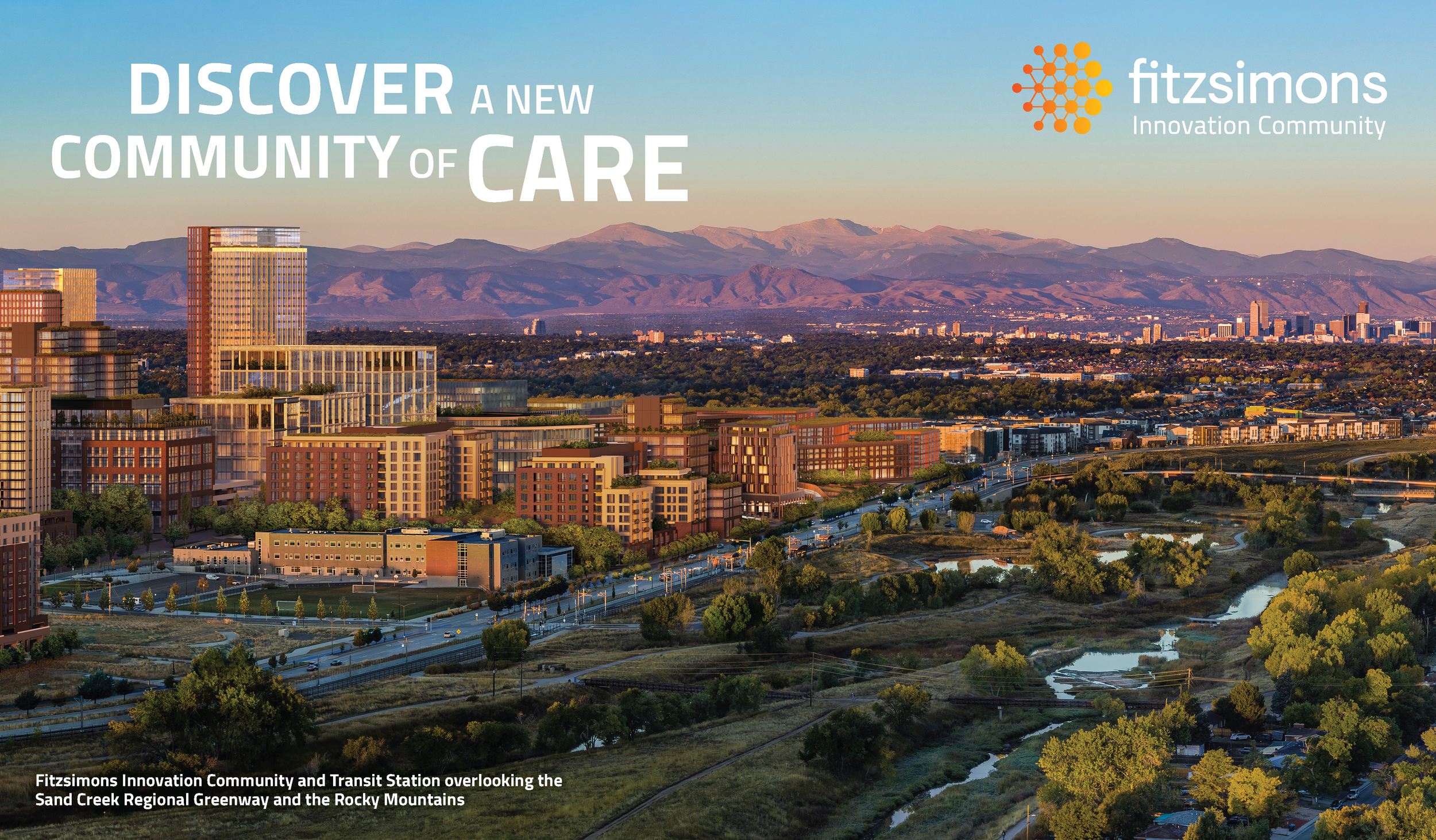
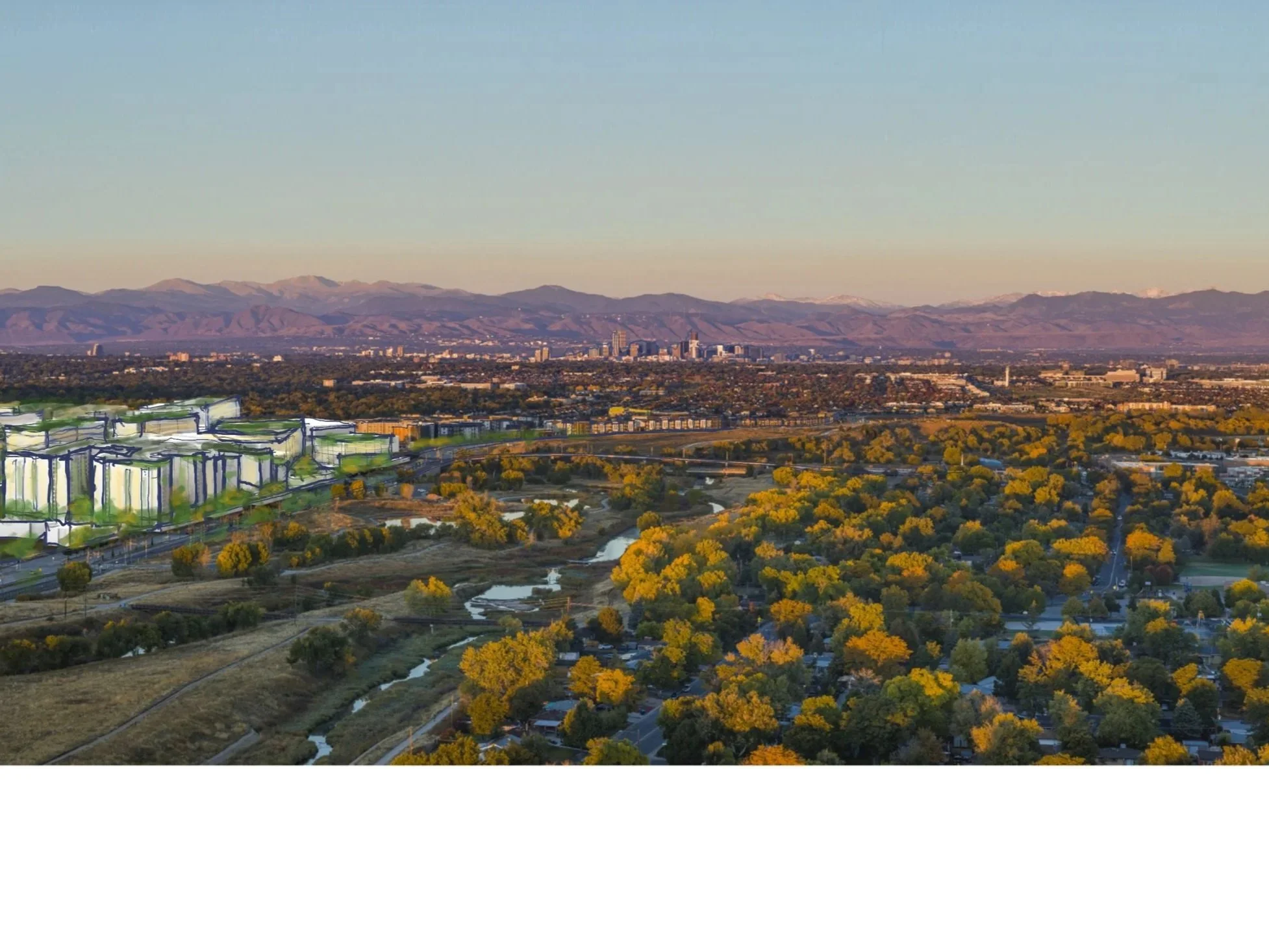
Fitzsimmons Innovation Community
Vision and Master Plan
Structuring the Transition from Suburban Campus to Urban District—establishing the spatial and civic framework necessary for long-term urban growth.
01 — Observations and Analysis
The campus contained significant institutional strength but lacked a coherent urban framework capable of organizing growth.
Systems
CU Anschutz Medical Campus as regional research anchor
Sand Creek ecological corridor and regional trail network
RTD rail station connecting the district to Denver
Overscaled arterial roadways and legacy military grid
Fragmented open space and campus circulation patterns
02 — Patterns and Opportunities
To attract world-class talent, research institutions, and startups, the district required more than laboratory space. It needed civic infrastructure and a recognizable center.
Opportunities
Establish a civic core for students, researchers, and the Aurora community
Transform streets from auto corridors into walkable connections
Organize open space into a connected civic landscape
Create identity and gathering spaces for the innovation district
Align growth with regional transit access
03 — Structuring the Future
The General Development Plan established the spatial and infrastructure framework necessary for the district’s next phase of growth.
Framework
Urban street and block structure to support density
Integrated civic open space network
Multimodal mobility system linking campus and transit
Development capacity expanded from 6M to 18M square feet
Entitlement strategy supporting phased district growth
Client
Fitzsimons Redevelopment Authority
Role
Urban Design, Master Planning and Entitlement Lead*
Team
Fehr & Peers - Mobility Study
Matrix - Civil Engineering
Strae - Public Finance








-
![]()
The Atlas Project
-
![]()
The Echo Project
-
![]()
The Brightline Project
-
![]()
The Northgrid Project